ENERGY FOR ONE WORLD
15-Year Impact & Achievements Report | 2012–2026
Prepared for Mission Energy For One World Foundation
Founder: Adriaan Kamp
Evidence review cut-off: 3 November 2026
INDEPENDENTLY SOURCED WHERE POSSIBLE • TRANSPARENT ABOUT EVIDENCE GAPS
Executive summary
Between 2012 and 2026, Adriaan Kamp developed Energy For One World (EFOW) from a book-led independent practice into a sustained body of work on global energy, energy-economy architecture, sustainable development and responsible leadership. The record shows continuity of purpose, a developing intellectual framework, publications, educational activity, professional dialogue and public commentary.
The strongest independently corroborated achievements are: (1) publication of the 2012 book and early public engagement; (2) a formal programme role in Nyenrode’s Energy Mini MBA; (3) media visibility and public challenge to incumbent oil-company strategy in 2015; (4) as an example, documented participation in an EU–India clean-energy/SDG dialogue in 2018; (5) again, as an example, an EDF Power Talk contribution in 2018; and (6) a sustained publication and engagement programme culminating in the 2024 Agenda and the 2026 System B campaign.
The record supports a credible claim of sustained independent thought leadership and professional practice. It does not claim that EFOW has changed government policy, redirected major corporate investment, delivered large-scale energy projects, or produced quantified social, economic or emissions outcomes. That is not what this practice is all about.
| Overall finding: EFOW’s demonstrated impact to date is strongest in agenda-setting, education, public dialogue, holding the mirror and imagining new framework development. The impact of EFOW has been seeding Responsible Leadership, Dialogue, Agenda and Working Programs on Energy, Economy, Sustainable Development and Peace. |
1. Mandate, scope and method
This report covers the period from the publication of Energy For One World in December 2012 to 3 November 2026. It reviews the founder’s and practice’s public-facing record, selected institutional materials, available programme documentation and material supplied in the EFOW publication archive.
The report distinguishes four evidence classes: A — independently corroborated by an external institution, media outlet or published programme; B — supported by dated EFOW primary material or a contemporaneous programme/document; C — founder-reported retrospective claims that need external corroboration; D — proposals, aspirations or impact claims for which outcome evidence is not presently available.
This is a desk-based first edition. It is not an audit of finances, legal status, employment, beneficiary numbers, contracts, policy adoption or project outcomes. The use of the word ‘Foundation’ in EFOW materials is not, by itself, evidence of a particular legal registration or charitable status.
The report treats publication and event evidence as evidence that an activity occurred, not as proof that it changed decisions. EFOW-authored web pages are useful primary sources for the organisation’s own account, but claims about influence and impact require corroboration from counterparties, participants, clients or decision records.
2. Mission and evolution of the practice
EFOW’s founding question, as stated in the 2012 book and subsequent mission material, is how to provide reliable, affordable and sustainable energy to a growing world population while avoiding social, ecological and geopolitical harm. Its 2016 formulation — ‘Energy Free of Concerns & Societies Free of Concerns’ — expresses the mission in accessible language.
The practice’s distinctive premise is integrative: energy is treated not as a stand-alone technology or commodity question but as an organising foundation for economic development, human wellbeing, climate action, nature, peace and international relations. EFOW describes its role as bridging conventional energy, clean technology, public institutions and sustainable-development objectives.
Over time, the vocabulary has evolved from ‘Energy House’ and integrated energy-transition programmes to ‘Good Future Making’, ‘System A/System B’ and ‘The Architecture of Living Together’. In 2026, System B is presented as an alternative architecture based on resilient infrastructure, energy equity, long-term stewardship, coordinated institutions and accountable leadership.
The intellectual progression is visible in dated publications and presentations. However, EFOW should describe System B as its proposed framework, and as a guiding model for implementation.
3. Chronology of documented activity
2012–2013 | Founding and public launch
The book Energy For One World was published in December 2012. EFOW’s media archive records a NOS EenVandaag television interview on 19 June 2012 about Dutch preparedness for higher oil prices, a video message to the Re-thinking Sustainability Leadership Exchange in Toronto on 2 October 2012, and a video message to the Global Investor Summit in Verbier on 7 December 2012. These records show early public engagement with energy security, sustainability and senior business audiences. The book and the archive establish the starting point of the practice; attendance figures and audience reach remain to be assembled.
2014–2015 | Executive education, SDGs and public challenge
A Nyenrode Energy Mini MBA brochure identifies Adriaan Kamp as programme director and founder of Energy For One World. The eight-day programme covered energy markets, smart grids, renewable-energy development, financial management, innovation, leadership and change management. Its stated purpose was to help managers connect beyond their specialist or organisational silos. EFOW’s retrospective also reports cooperation with Energy Delta Institute.
EFOW’s founder biography reports work connected to the UN Sustainable Development Solutions Network and presentations at early global working conferences associated with Professor Jeffrey Sachs at Columbia University, as well as invited classes at Trinity College Dublin in 2015. These are important references and is to be taken seriously.
In January 2015, The Guardian quoted Kamp at Davos calling for a new spirit in companies, society and economies and a different way for business and society professionals to organise. In April 2015, Energy Post published an interview in which he argued that oil companies had capabilities relevant to the future energy system but remained constrained by their incumbent business interests. The Guardian and Energy Post coverage independently establish that Kamp’s critique entered public energy debate.
EFOW’s media archive also records a February 2015 interview with Het Financieele Dagblad and a BNR radio contribution on energy architecture and sustainable development in Northwest Europe in October 2015. Copies or broadcast records should be retained in the evidence archive.
2016–2017 | Ethics, stewardship and conversion
EFOW’s account describes a three-month period in Assisi in 2016 and the development of Tales of Conversion, linking corporate and government leadership to Pope Francis’s Laudato Si’, the spirit of Assisi, peace and the UN SDGs. The publication is listed in Kamp’s public professional profile. EFOW also reports a programme engagement with the International Franciscan Order in Washington, D.C.; the programme brief, invitation and counterpart confirmation should be collected before describing the engagement as an institutional partnership.
The founder biography reports collaboration in 2017 with May East and Gaia Education on SDG education. The report records this as founder-reported pending a dated joint programme, agreement or public confirmation.
2018–2019 | International bridge-building and circular economy
The EFOW media archive documents , and as an example, Kamp as moderator of the 21 September 2018 India–EU dialogue on co-creating projects aligned with the SDGs, held in the context of the EU Business Beyond Borders programme and FICCI in Delhi. The archive reproduces contemporaneous EU in India and Business Beyond Borders posts and a report of the session. This is one of a clear example of EFOW’s bridge-building activity with an external institutional setting.
The same archive records, and again as an example, an EDF Power Talk at London’s Design Museum in September 2018, where Kamp discussed energy, circular business and the need to connect energy and economic systems. It also lists a February 2018 Shell New Energies workshop on energy architecture, climate and the SDGs. The EDF material is independently hosted by EDF;.
EFOW reports consultancy on the energy transition in Northwest Europe in 2018 and a 2019 effort to connect energy, climate and SDG agendas..
2020–2021 | Build Back Better and the Decade of Action
In December 2020, Kamp published 99 Theses to Build Back Better. The publication presents a synthesis of a decade of professional experience and experimental work on global change, energy-economy architecture, the Paris Agreement, SDGs and leadership. EFOW framed it as a contribution to deeper dialogue and reform rather than a claim to have delivered policy change.
EFOW’s media archive lists COP26 messages and webcasts in 2021, including ‘New Coptimism? Early Lessons from COP26’ and a draft opening statement for a post-COP26 event. Copies, event details, view counts and any partner feedback should be added to the archive.
2022–2023 | Humanising Energy and renewed professional engagement
EFOW’s media archive records a Shell Alumni Network webinar on 15 June 2022 (‘Imagine the Future’), a June 2022 contribution on the impact of the war in Ukraine, and a November 2022 ‘Humanising Energy’ item. A 2023 Energy and Innovation masterclass is also listed. Kamp was creator, organiser, host and moderator of a Shell Alumni conference-theme titled ‘Humanising Energy’, with Dr. Angela Wilkinson as key speaker, 4 former Shell colleagues and Dr. Singh.
2024–2025 | Good Future Making and European strategy
The 2024 Agenda is a dated, substantial EFOW publication. It sets out the relationship between energy transition, the Paris Agreement, the SDGs, geopolitical change, human development, resource constraints and planetary boundaries. It proposes practical areas for dialogue including electrification, trade, grid integration and reform. The publication demonstrates a developed programme of analysis;.
EFOW’s website records a 2024 review, a response to the Draghi Report, and follow-up calls on the European Commission programme. Its founder biography describes a 2024 publication on Europe, international relations, peace, energy, climate and the SDGs. EFOW’s 2025 materials refer to lessons from the Decade of Action and a renewed focus on essentials. These items should be consolidated into a dated publication register with direct links and version control.
2026 | System B and institutional consolidation
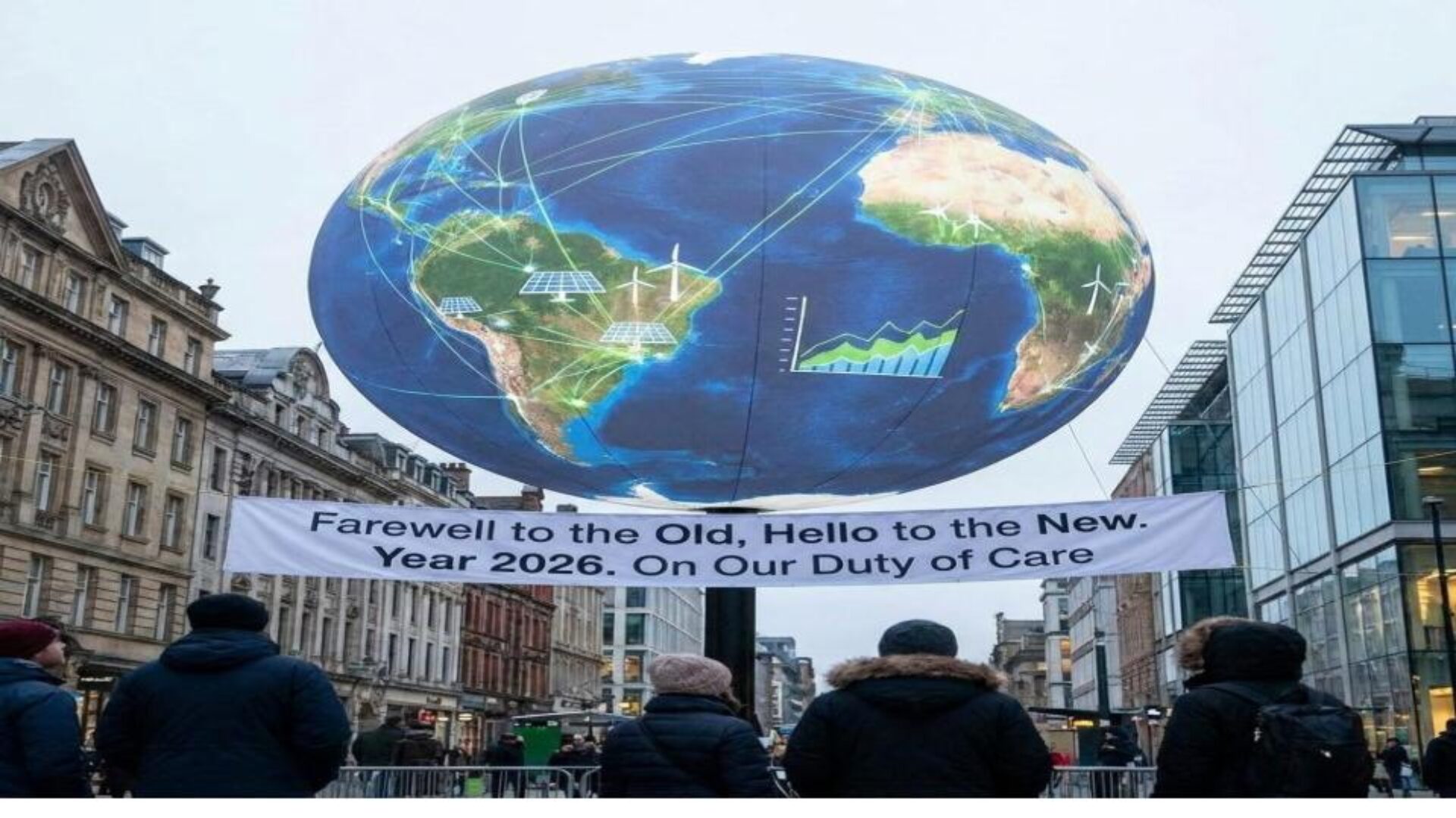
In 2026, EFOW launched a campaign around the Architecture of System B. Its current publication register lists work on geopolitics, Europe, the UN, Big Oil, energy equity, financial architecture, duty of care, peace and sustainable development. It also identifies presentations on the EFOW Declaration, System B architecture, new energy realities and leadership lessons.
The 2026 publication list is evidence of a significant and varied body of current work. It is a catalogue of outputs, not a count of completed projects or proof of readership, uptake or influence. Each item should be linked to a final published file, date, author/contributor, version, audience and evidence of use.
4. Main areas of contribution
A. Integrating energy with human development and the SDGs
EFOW consistently connects energy access, affordability, reliability and sustainability with economic opportunity, social inclusion, climate action and nature. This integrative framing is evident in the 2012 book, the Nyenrode programme, the 2018 India–EU dialogue, the 2020 theses and the 2024 Agenda.
B. Challenging incumbent energy leadership
Kamp’s 2015 Energy Post interview and Guardian commentary are tangible evidence of an independent challenge to incumbent corporate strategy. The contribution is not simply opposition to oil and gas: it argues that engineering, project delivery, risk management and capital capabilities in established companies could be redeployed in a wider energy transition. EFOW’s later ‘Duty of Care’ and ‘Shared Stewardship’ theses extend this argument into governance and accountability.
C. Education and professional development
The Nyenrode Energy Mini MBA brochure is strong documentary evidence of a programme role and curriculum. Later EFOW material refers to masterclasses and executive education. To establish its ultimate impact, EFOW is best to administer the number and profile of participants, cohorts, hours delivered, learning outcomes, repeat commissions and subsequent participant actions.
D. Convening and international bridge-building
The 2018 India–EU SDG dialogue and 2022 Shell Alumni engagement illustrate the practice’s convening and bridge-building capabilities and ambition. The record should distinguish between a speaking contribution, moderation, event organisation, a continuing partnership and a formal institutional mandate.
E. Ethical and human-centred leadership
The Assisi/Tales of Conversion work and the later ‘Humanising Energy’ theme add ethical reflection, stewardship, peace and human dignity to the energy debate. This is a distinctive strand of EFOW’s identity. Its value is best demonstrated through curricula, facilitated dialogues, participant testimony and evidence that organisations changed practice.
F. System architecture and future-making
The System A/System B framing and the 2026 Architecture of System B campaign represent an attempt to move from diagnosis to an integrated alternative. The current framework includes infrastructure, finance, governance, equity, corporate responsibility and diplomacy. Its next test is practical: can it be translated into a limited number of feasible, costed, governed and independently reviewed pilots?
5. Impact assessment: what is demonstrated and what is not
The evidence supports the following conclusions: EFOW has sustained an independent practice for approximately fourteen years from the December 2012 publication to the November 2026 reporting cut-off; Kamp has developed a coherent and evolving body of thought; the work has entered elected media, education and professional settings; and EFOW has maintained a public output stream across major energy and geopolitical developments.
6. Evidence-based performance scorecard
| Dimension | Current evidence judgement | What would substantiate impact |
| Independent thought leadership | Strong documentary record of books, essays, briefs and public commentary | Complete publication catalogue; citations, readership and independent reviews |
| Public visibility | External media coverage in 2015; dated public event records | Media reach, invitations, audience figures and follow-up |
| Executive education | Nyenrode Energy Mini MBA programme role documented | Cohort lists, participant numbers, evaluations, alumni outcomes |
| International engagement | 2018 India–EU dialogue documented; other engagements partly self-reported | Agendas, invitations, partner confirmations, minutes and outputs |
| Corporate influence | Public critique and workshop activity documented | Board/management correspondence, commissioned work, decisions changed |
| Government/policy influence | Proposals and public commentary documented | Formal submissions, citations, official responses, policy adoption |
| Project/investment outcomes | Proposals and programme concepts documented | Funded projects, investment amounts, delivery milestones, beneficiaries |
| Institutional sustainability | Foundation-building ambition described in EFOW material | Registration, governance, accounts, funding, staff and succession |
Ratings describe the strength of the evidence currently reviewed, not the intrinsic quality or importance of the work.
7. What should be measured from now on
EFOW may benefit to introduce a light but rigorous impact system. Each activity should have a unique reference number and record: date; title; format; author/speaker; partner; audience; intended change; output; follow-up; evidence link; and status. Outcomes should be logged at 3, 6 and 12 months where feasible.
| KPI | Minimum evidence to collect |
| Publications | Final PDF/URL, date, version, author, downloads/views, citations or external references |
| Speaking and media | Invitation, programme, recording/link, audience size, organiser confirmation, media reach |
| Education | Programme brochure, curriculum, cohort count, attendance, evaluations, learning outcomes |
| Advisory assignments | Contract or scope, client confirmation, deliverables, confidentiality status, recommendations |
| Partnerships | Signed agreement or written confirmation, named counterpart, joint outputs, duration |
| Policy influence | Submission, receipt, meeting record, official citation/response, adopted recommendation |
| Project outcomes | Project owner, baseline, financing, milestones, beneficiaries, independent verification |
| Financial stewardship | Annual accounts, income sources, grant restrictions, expenditure, in-kind support |
EFOW is best to establish baselines before publishing numeric claims. Where data cannot be recovered, use ‘not recorded’ rather than estimates. Historical gaps should be disclosed, not filled with invented numbers.
9. Balanced conclusion
The 2012–2026 record is a serious and sustained independent practice, not merely a collection of recent campaign documents. Its strongest achievements are the development of an integrated energy-and-development worldview; the creation of executive education content; public challenge to incumbent oil-company strategy; participation in international dialogue; and the accumulation of a substantial body of publications and proposals.
Its distinctive value lies in connecting operational energy-industry experience with broader questions of human development, geopolitics, peace, climate, corporate stewardship and leadership. The practice has consistently asked how energy systems can serve society rather than simply reproduce the interests and structures of the past.
The principal limitation is not a lack of ideas. It is the shortage of independently documented evidence showing how those ideas have been adopted, funded, implemented or translated into measurable outcomes. The report therefore finds a credible record of intellectual and professional contribution, but a still-developing record of institutional and material impact.
| The next chapter should be measured less by the volume of publications and more by the quality of partnerships, the decisions improved, the programmes delivered and the tangible benefits created. |
10. Proposed public statement
For fifteen years, Energy For One World has worked to broaden the global energy conversation: from energy supply alone to the architecture of energy-economies that can support human development, peace, climate action and the living world. Founded by Adriaan Kamp following the publication of Energy For One World in 2012, the practice has combined independent analysis, executive education, public dialogue, international bridge-building and proposals for responsible leadership. Its work has challenged established assumptions, connected energy with the UN Sustainable Development Goals and developed the emerging System B framework. This report records the work that can presently be evidenced, identifies where further verification is needed, and sets out a practical agenda to turn accumulated knowledge into partnerships, institutional learning and measurable outcomes.
Appendix A. Selected documentary and external sources
- 1. EFOW, ‘Origins of EFOW’ — founding question, mission evolution, Energy House concept and retrospective account: https://www.energyforoneworld.com/summary-of-practice/welcome
- 2. EFOW, ‘Background on Founder’ — career and activity chronology (primary, founder/organisation account): https://www.energyforoneworld.com/summary-of-practice/background-on-founder
- 3. EFOW, ‘News & Media’ — dated archive of 2012–2026 media, events and publications: https://www.energyforoneworld.com/contact-us
- 4. Nyenrode Energy Mini MBA brochure — programme scope and Kamp’s programme-director role: https://energyforoneworld.com/wp-content/uploads/2022/02/ENERGY-MINI-MBA-LEADERSHIP-ENTREPRENEURSHIP-STEWARDSHIP.pdf
- 5. The Guardian, 21 January 2015, ‘Why Davos must shake off the shackles of wealth and entitlement’: https://www.theguardian.com/sustainable-business/2015/jan/21/wealth-trap-davos-climate-change
- 6. Energy Post, 23 April 2015, ‘Adriaan – “Energy for One World” – Kamp (ex-Shell): “Strategy of oil companies is doomed to failure”’: https://energypost.eu/adriaan-energy-one-world-kamp-ex-shell-strategy-oil-companies-doomed-failure/
- 7. EFOW, ‘Book: 99 Theses to Build Back Better’ (December 2020): https://www.energyforoneworld.com/contact-us/group-webinars-for-entrepreneurs-corporate-game-changers-and-future-influencers
- 8. EFOW, ‘Agenda 2024: Good Future Making’ (January 2024): https://energyforoneworld.com/wp-content/uploads/2024/01/Agenda-2024-Version-1.2-Updated-3.pdf
- 9. EFOW, 2026 Strategic Briefing & Curated Publications: https://www.energyforoneworld.com/services-and-solutions/2026-publications-on-our-good-future-making
- 10. Shell Alumni, ‘The Journey from Corporate to Caritas’ event/profile: https://shellalumni.org/topics/19379/events/178940
- 11. Speakers Corner, Adriaan Kamp profile and reported speaker/event history: https://www.speakerscorner.co.uk/adrian-kamp
- 12. EFOW, ‘Summary of Practice’ — mission, practice areas and publication links: https://www.energyforoneworld.com/summary-of-practice
Appendix B. Evidence labels and publication note
A — External corroboration: an independent media outlet, institution, event organiser or official programme confirms the activity or contribution.
B — Contemporaneous primary record: dated EFOW publication, event programme, recording, presentation or archive confirms that an output or activity existed. It does not by itself prove external impact.
C — Retrospective founder/EFOW account: useful for identifying leads and context, but requires corroboration for high-stakes claims.
D — Proposal or aspiration: an idea, recommendation, planned programme or intended outcome. It must not be reported as completed delivery.
Prepared as a first-edition working report for review by the EFOW founder and governing body. Before external publication, verify names, dates, legal entity details, document versions, permissions, and all claims marked C or D. Update this report when supporting records are obtained.